The transformation of heavy-duty transport requires more than new powertrain technologies. It demands vehicles that operate without tailpipe emissions while meeting the challenges of everyday logistics. This is where FES comes in. FEScell is the hydrogen fuel cell truck for businesses that see sustainable transport not as an experiment, but as an integral part of their operations. Developed for professional heavy-duty applications, FEScell combines zero-emission driving with high performance, extended range and excellent vehicle availability.
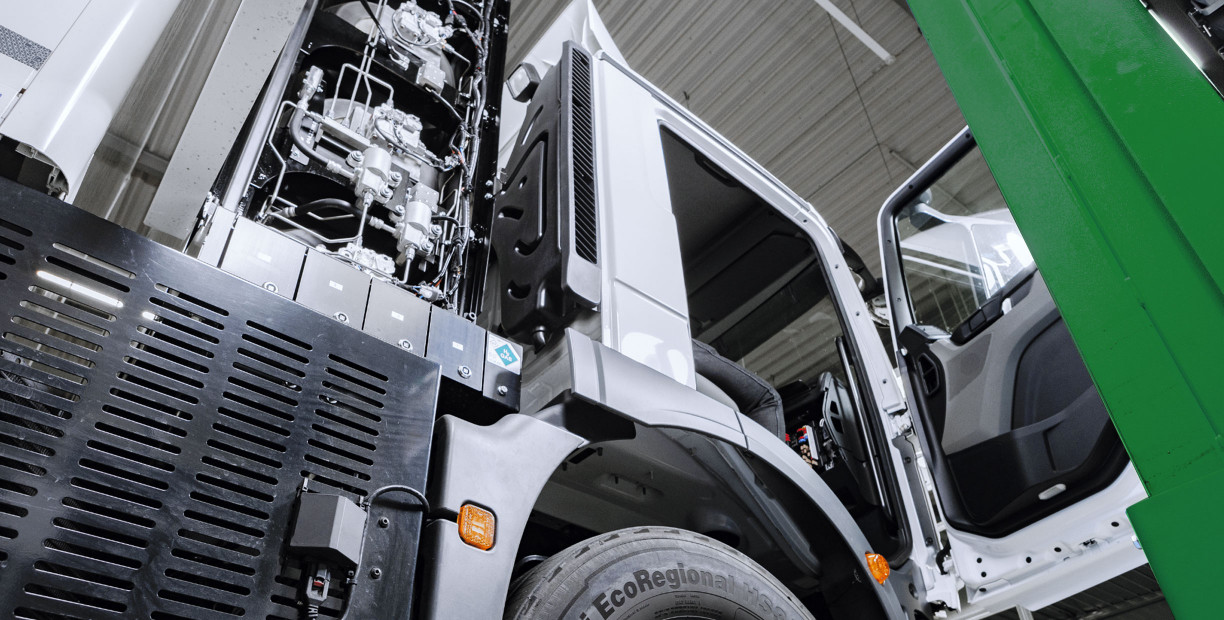
Sustainable logistics must perform reliably in everyday operations. FEScell enables zero-emission transport without slowing down existing processes or compromising operational efficiency. By combining hydrogen fuel cell technology with an electric powertrain, FES delivers vehicles designed to meet regulatory requirements while maintaining operational reliability. Sustainability becomes more than an additional initiative. It becomes an integral part of your transport strategy.
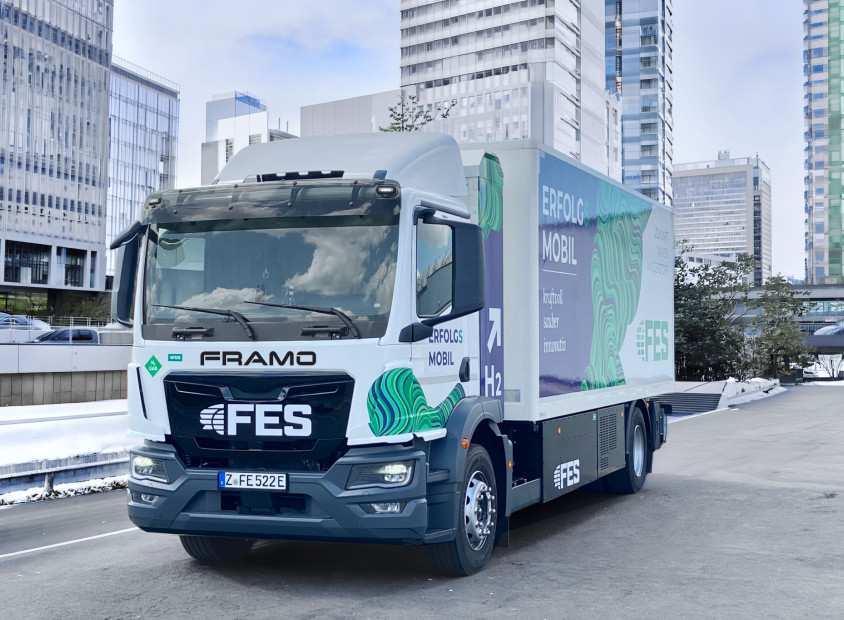
FEScell was developed not simply for testing environments, but for everyday logistics operations – from loading bays and distribution routes to long-distance transport. Power reserves, robust components and intelligent energy management ensure reliable performance, even under demanding operating conditions.
Short refuelling times, consistent driving range and high continuous power output enable seamless integration into existing transport schedules.
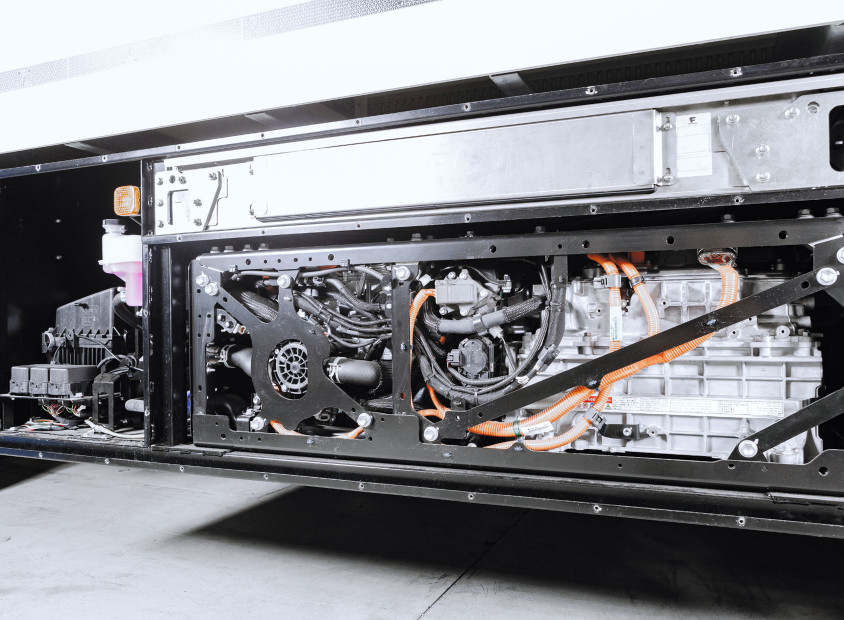
The FEScell vehicle architecture is engineered for long-term operation and high durability. Its electric dual-motor powertrain delivers 280 kW of continuous power and up to 308 kW of boost power. The carbon-fibre-reinforced hydrogen storage system enables a driving range of up to 500 kilometres while maintaining efficient hydrogen consumption.
The intelligent arrangement of batteries, fuel cells and cooling systems ensures excellent service accessibility. At the same time, the modular vehicle architecture provides flexibility for different transport requirements.
Individual vehicle configurations are available to meet specific operational requirements.
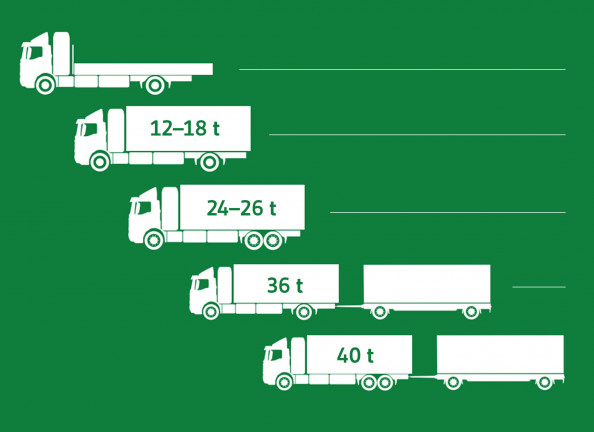
Every logistics operation has different requirements. That is why FES relies on a modular vehicle architecture. The body-independent hydrogen storage system supports a wide range of configurations – from conventional box bodies to specialised commercial vehicles.
The additional installation space required for hydrogen technology is accommodated through an EU-compliant extension of the vehicle. This preserves usable cargo space and ensures flexibility for different transport applications.
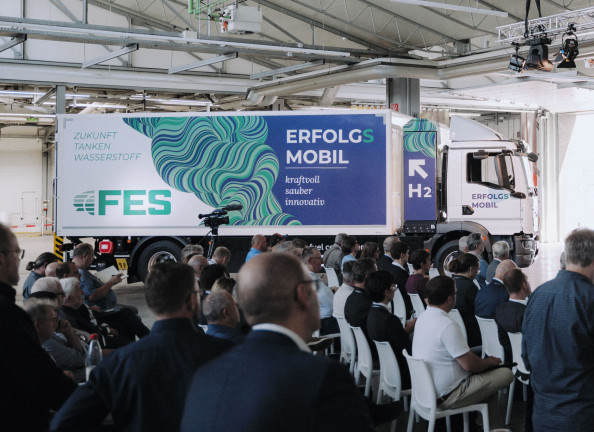
The FEScell fuel cell truck is designed as a commercially viable investment, not merely as a technology demonstrator. Low maintenance requirements, high vehicle availability and predictable operating costs provide a foundation for long-term economic efficiency.
Operators may also benefit from available funding programmes and reduced exposure to future regulatory restrictions. This creates greater planning certainty for fleet investments over the coming years.
FEScell trucks produce zero tailpipe emissions during operation. No CO₂, nitrogen oxides or exhaust particulate emissions are generated while driving. This makes the vehicles particularly suitable for sustainable supply chains, urban transport zones and companies pursuing ambitious ESG and climate targets. When operated using green hydrogen, the overall climate impact of transport can be significantly reduced.
Yes. The vehicles have been specifically developed for demanding heavy-duty and long-distance transport applications. They offer high continuous power output, additional performance reserves and driving ranges of up to 1,000 kilometres, depending on vehicle configuration and operating profile. This enables long-distance operations and the transport of heavy payloads with minimal disruption to existing logistics processes.
Thanks to short refuelling times and reduced downtime, FEScell trucks are designed to achieve high vehicle availability. Their systems are engineered for durability and low maintenance requirements. Over the vehicle's service life, this can help reduce operating costs and improve fleet planning and operational efficiency.
FES GreenHaul trucks feature a body-independent hydrogen storage system and a modular vehicle architecture. This allows a variety of box bodies, refrigerated bodies and specialised configurations to be implemented. Adaptations for specific transport requirements are also possible. An EU-compliant vehicle extension helps preserve usable cargo space despite the additional installation requirements of the hydrogen system.
Yes. FEScell vehicles are designed to address current and evolving emissions and regulatory requirements. Their compatibility with developing hydrogen infrastructure, scalable architecture and the extensive engineering expertise of FES provide a strong foundation for long-term operation. They also support companies in strengthening their sustainability credentials with customers, partners and markets. FES provides individual support throughout pilot projects and subsequent scaling phases.
FEScell trucks are no longer just a vision for the future. They represent a practical option for heavy-duty transport. With its integrated FEScell platform, FES demonstrates how advanced technology, engineering expertise and real-world operational requirements can come together.

Your FEScell Fuel Cell Truck Expert
Felix Hermann
Project Manager
Your enquiry will be forwarded directly to the relevant department. For telephone enquiries, please contact our main office.
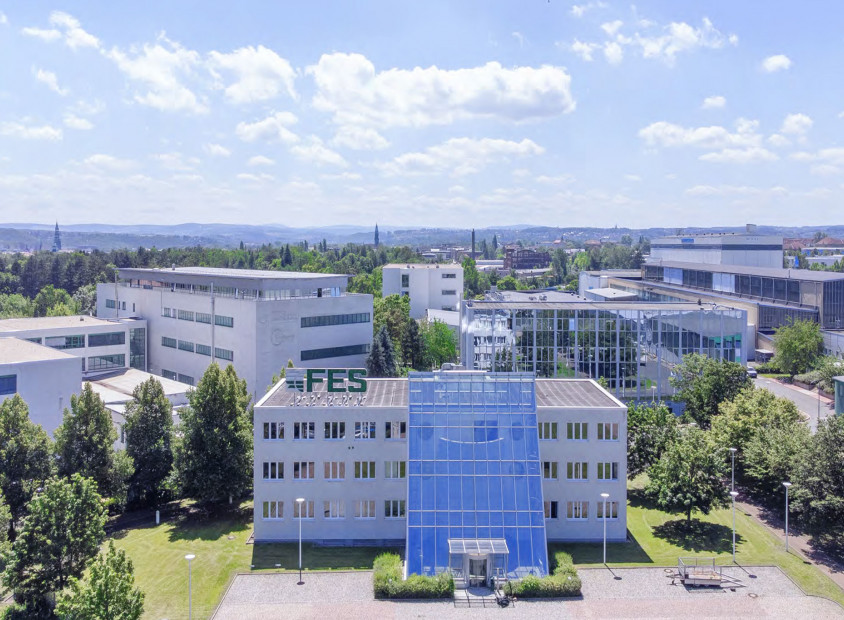
FES sees itself not simply as a conventional vehicle supplier, but as a long-term project partner.
From initial requirements analysis and vehicle specification through to fleet deployment and scaling, FES supports customers throughout the entire lifecycle of their FEScell vehicles.
The result is future-oriented logistics solutions that deliver not only technical performance but also operational and economic viability. Established in 1992, FES has become an internationally recognised engineering service provider specialising in complete vehicle development, with approximately 850 employees.
Alongside its engineering services, FES has expanded the application of its processes, methodologies and facilities to the development and manufacturing of its own products.
The company focuses on technologies supporting the transition towards sustainable mobility, including both battery-electric and hydrogen fuel cell vehicles.