Innovative vehicle development requires more than good ideas. It demands reliable data, reproducible results and rigorous validation. This is where FES comes in. With more than 100 engineers, technicians, mechanics and testing specialists, FES supports complex testing and validation projects for modern vehicle platforms – from conventional components to electrified and hydrogen-powered systems.
Across more than 9,500 m² of testing facilities, we develop testing and validation solutions that reduce development risks, ensure production readiness and make quality measurable.
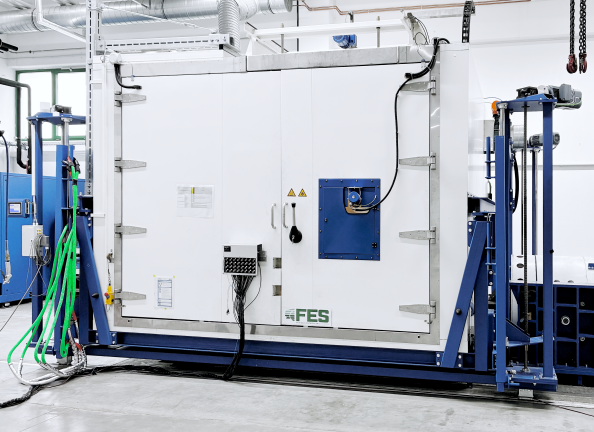
With its advanced test bench infrastructure, FES offers comprehensive capabilities for testing and validating vehicle components and complete systems. A wide range of testing methods enables realistic load simulations and reliable validation under demanding operating conditions.
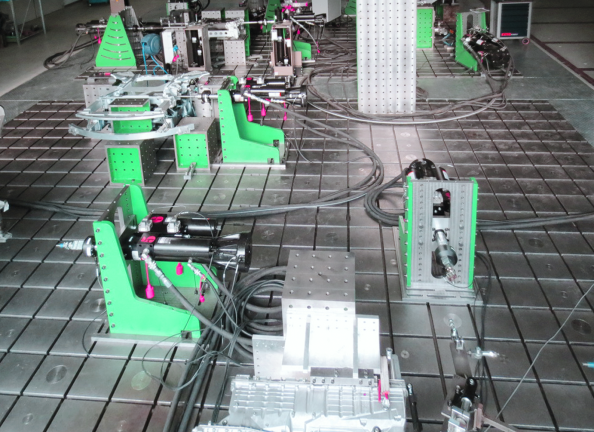
Using state-of-the-art measurement, testing and automation technology, FES provides the foundation for precise analysis and validation of complex vehicle components and systems. High-performance test benches, flexible measurement systems and comprehensive sensor technology enable reproducible results across a wide range of mechanical, electrical and physical requirements.
Our testing laboratory primarily serves the automotive industry. Its technical competence is demonstrated through flexible accreditation in accordance with DIN EN ISO/IEC 17025:2018 for the following testing procedures:
Within the scope of these procedures, our laboratory conducts standardised tests. Where necessary, our testing laboratory also modifies, extends or develops new testing procedures and validates them accordingly. This is made possible by the high qualifications of our specialists and the versatile capabilities of our laboratory equipment.
The development and validation of these testing procedures are always carried out in close collaboration with our customers.

FES provides a broad range of validation services covering modern vehicle development. Alongside conventional vehicle components, particular emphasis is placed on electric, hybrid and alternative powertrain systems. Our areas of expertise range from body and exterior validation, electrical and electronic systems, and chassis engineering to electromobility, fluid management and complete vehicle testing.
Every testing process is individually tailored to the development stage, load profile and intended operating conditions.

All testing and validation processes share one clear objective: production readiness.
FES takes responsibility for planning, coordinating and executing complex validation projects, integrating test results directly into subsequent development activities. This enables early identification of defects, shorter development cycles and reduced costs for subsequent modifications.
Testing procedures are based on accredited processes in accordance with DIN EN ISO/IEC 17025:2018.


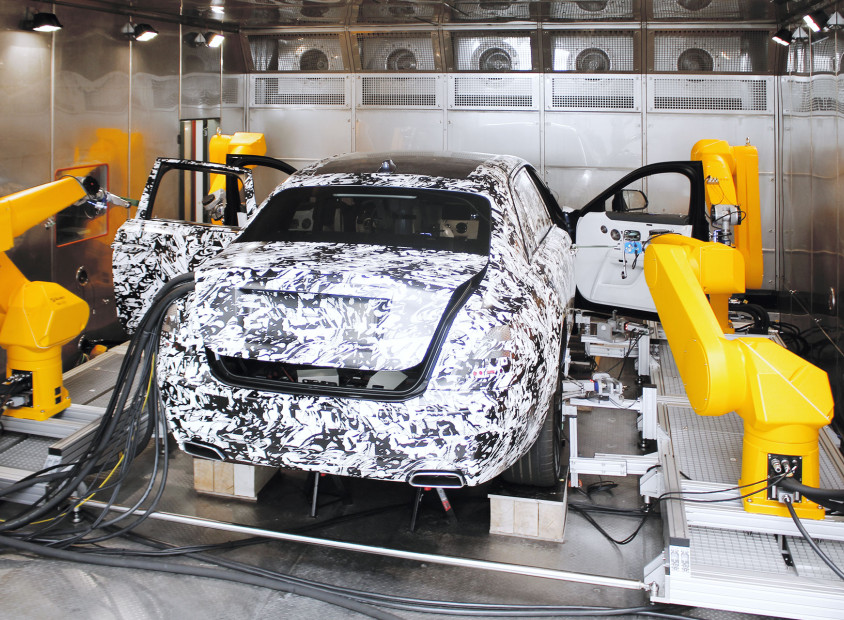
FES's particular strength lies in the close integration of engineering, system integration and testing. Test results feed directly back into design, simulation and system development. This enables faster iterations, well-founded decisions and greater development efficiency throughout the entire product lifecycle.
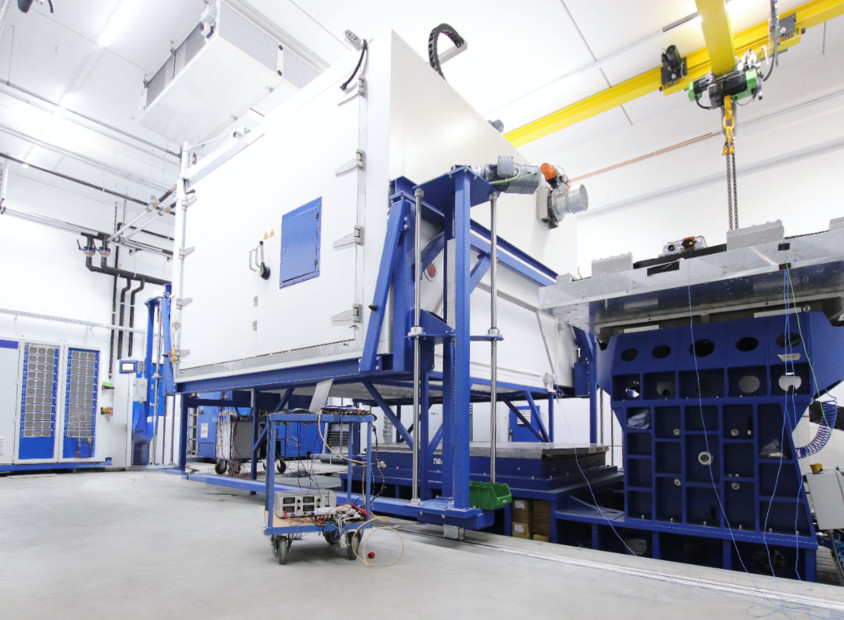
The FES Testing Department is accredited in accordance with DIN EN ISO/IEC 17025:2018. This demonstrates compliance with demanding requirements for reproducible testing procedures, documented quality assurance and traceable validation processes.
This builds confidence among OEMs, suppliers and development partners alike.

Technological transformation is increasing the demands placed on the validation of new vehicle platforms.
FES supports manufacturers, suppliers and development partners in validating electric, hybrid and hydrogen-powered systems. By combining testing, integration and comprehensive vehicle engineering expertise, we develop testing processes that validate not only individual components but also the interaction of complete vehicle architectures.

Your Expert for Testing & Validation
Thomas Appel
Leiter Versuch
Your message will be forwarded directly to the relevant department. For enquiries by telephone, please contact our main office:
FES provides comprehensive testing and validation services for individual vehicle components, complex subsystems and complete vehicles. Its capabilities include mechanical, electrical, thermal, climatic and functional validation as well as corrosion testing – from early development and product validation through to production approval and requalification.
Components and systems that can be tested include:
A wide range of testing procedures and measurement technologies is available for technical validation. These include climatic chambers with volumes from 0.2 to 113 m³, vibration test systems with forces from 6.3 to 200 kN, durability test benches, and facilities for temperature cycling, thermal shock, water, dust, salt spray and solar simulation testing.
Additional capabilities include pulsating pressure test benches, materials testing machines, 3D scanning, photogrammetry and acoustic measurements for detailed analysis of component behaviour.
Comprehensive sensor systems capture relevant parameters such as force, torque, strain, acceleration, temperature, pressure, volumetric flow rate, current, voltage and sound pressure. Automated test sequences and digital data acquisition support reproducible results and systematic evaluation.
The key advantage: FES directly integrates testing and validation with vehicle development. Test results can feed back into design, simulation and system optimisation, allowing weaknesses to be identified early, development stages to be improved and the evidence required for product validation and production approval to be generated.
With more than 100 testing specialists, over 9,500 m² of testing facilities and experience gained from more than 450 million test kilometres, FES offers extensive capabilities for demanding validation projects.
The testing laboratory is accredited in accordance with DIN EN ISO/IEC 17025:2018.
FES validates components and systems covering body structures, exterior, interior, chassis and suspension, electrical and electronic systems, electromobility and complete vehicle architectures.
Yes. FES has extensive experience in validating electric, hybrid and hydrogen-powered vehicle platforms.
Yes. Its services range from individual component testing to the complete validation of entire vehicle development projects, including test planning and execution.
Testing procedures are based on accredited processes in accordance with DIN EN ISO/IEC 17025:2018.
Yes. In addition to laboratory and test bench testing, FES conducts extensive vehicle testing on public roads, proving grounds, off-road tracks and racing circuits.
Copy
Test and measurement data feed directly back into design, simulation and system development to shorten development cycles and minimise risks at an early stage.

FES sees itself not simply as a conventional vehicle supplier, but as a long-term project partner.
Established in 1992, FES has become an internationally recognised engineering service provider specialising in complete vehicle development, with approximately 850 employees.
Alongside its engineering services, FES has also begun applying its processes, methodologies and facilities to the development and manufacturing of its own products. The company focuses on technologies that support the energy transition in mobility, including battery-electric and fuel-cell-powered vehicles.


